MiniHoarder
Overview
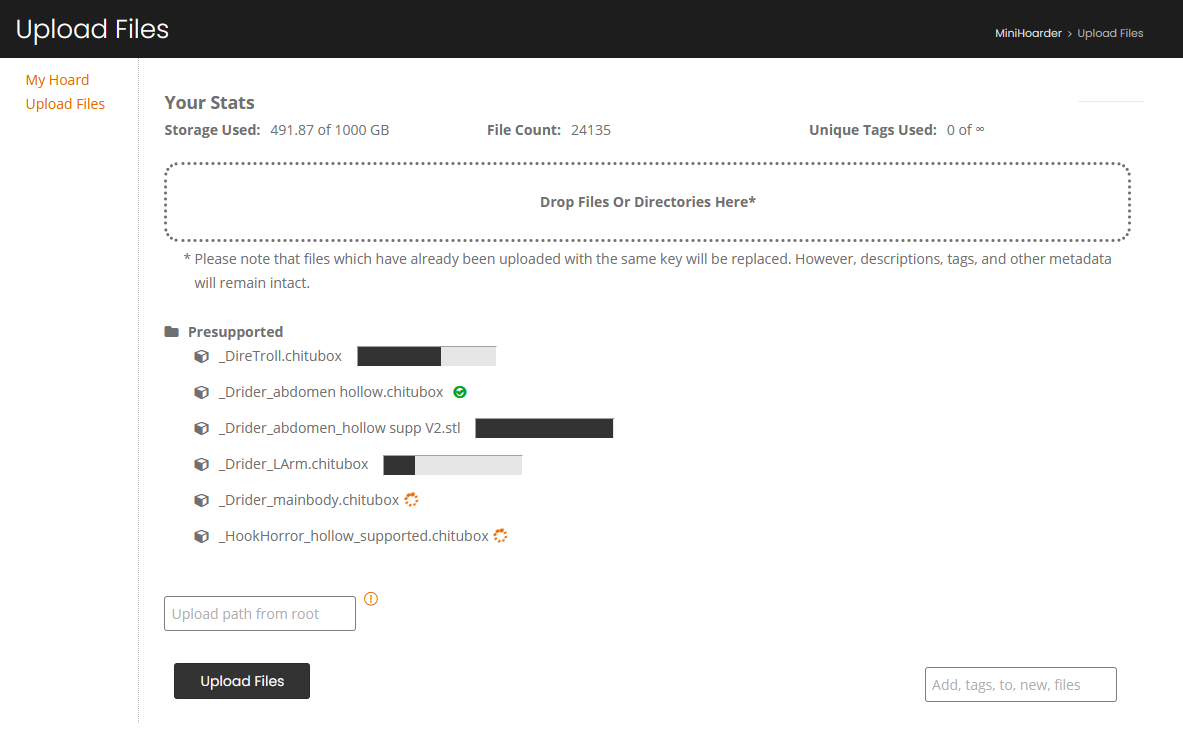
MiniHoarder was a labor of love that I started after becoming interested in 3D printing, primarily to support my tabletop gaming habits. I realized after collecting several hundred printable models that:
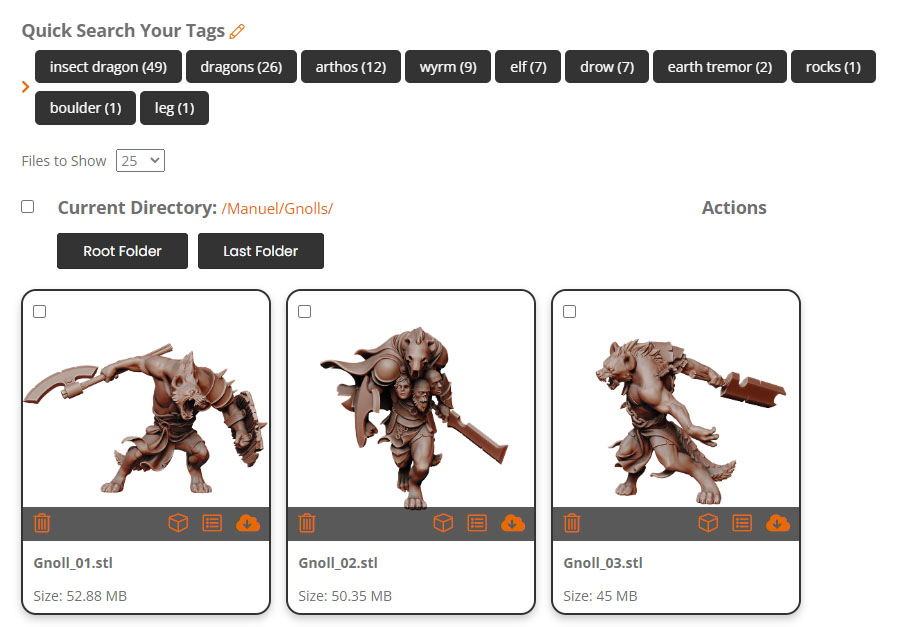
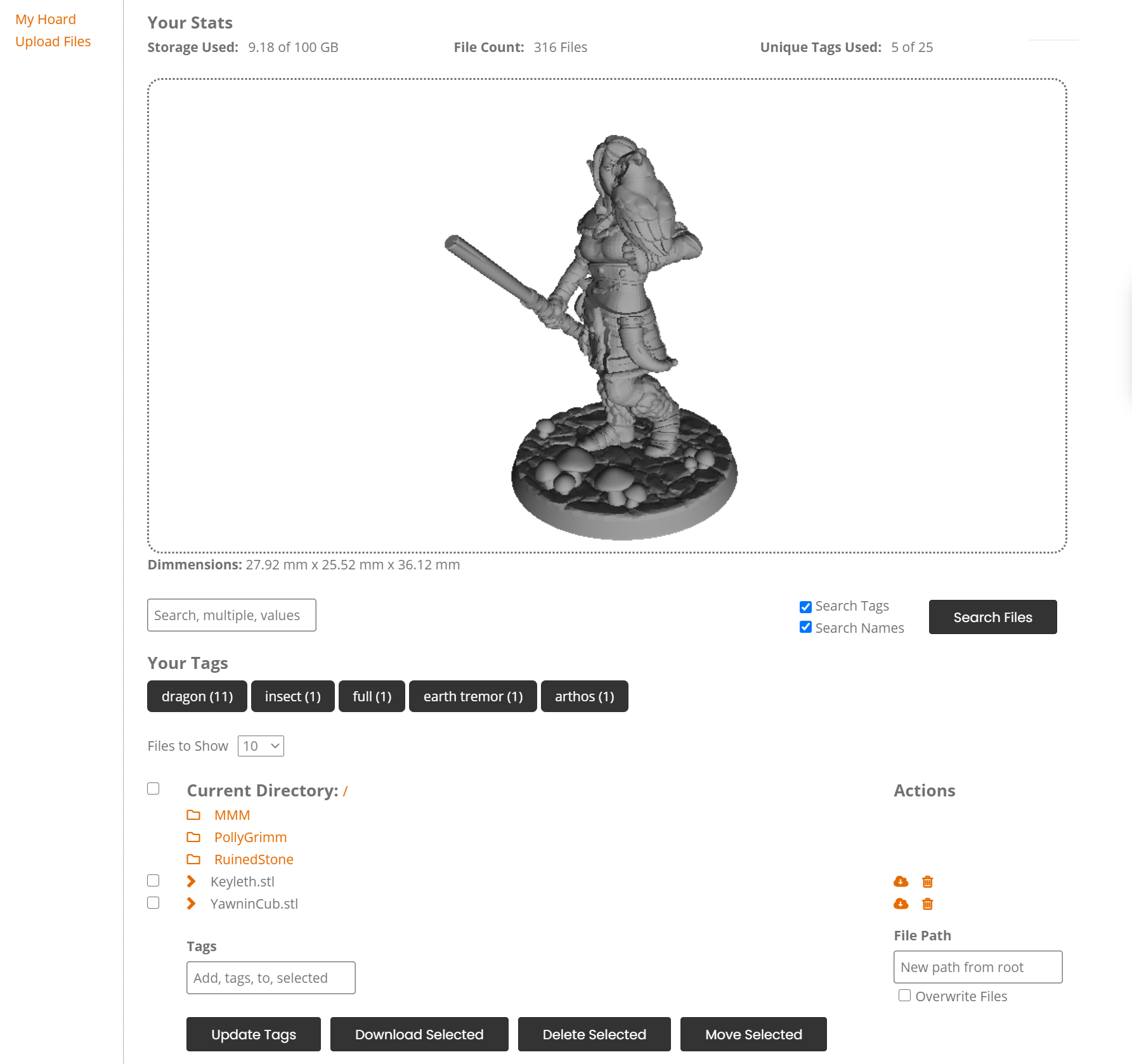
- I had no way to easily find, or even remember, specific models in my collection
- I was worried about storing them locally incase something happened to my PC (I had spent an embarrassing amount of money on them)
A cloud based solution with some frontend tooling for organizing and searching the collection seemed like a good idea. After some poking around, it didn’t seem like there was anything available that met both requirements, so I set out to build one.
At the same time, I also realized that most of the current sites allowing artists to sell their models either had subscription fees associated with them, or took a hefty percentage of the sale, or both. This seemed unfair and like an opportunity to help a community that I really valued.
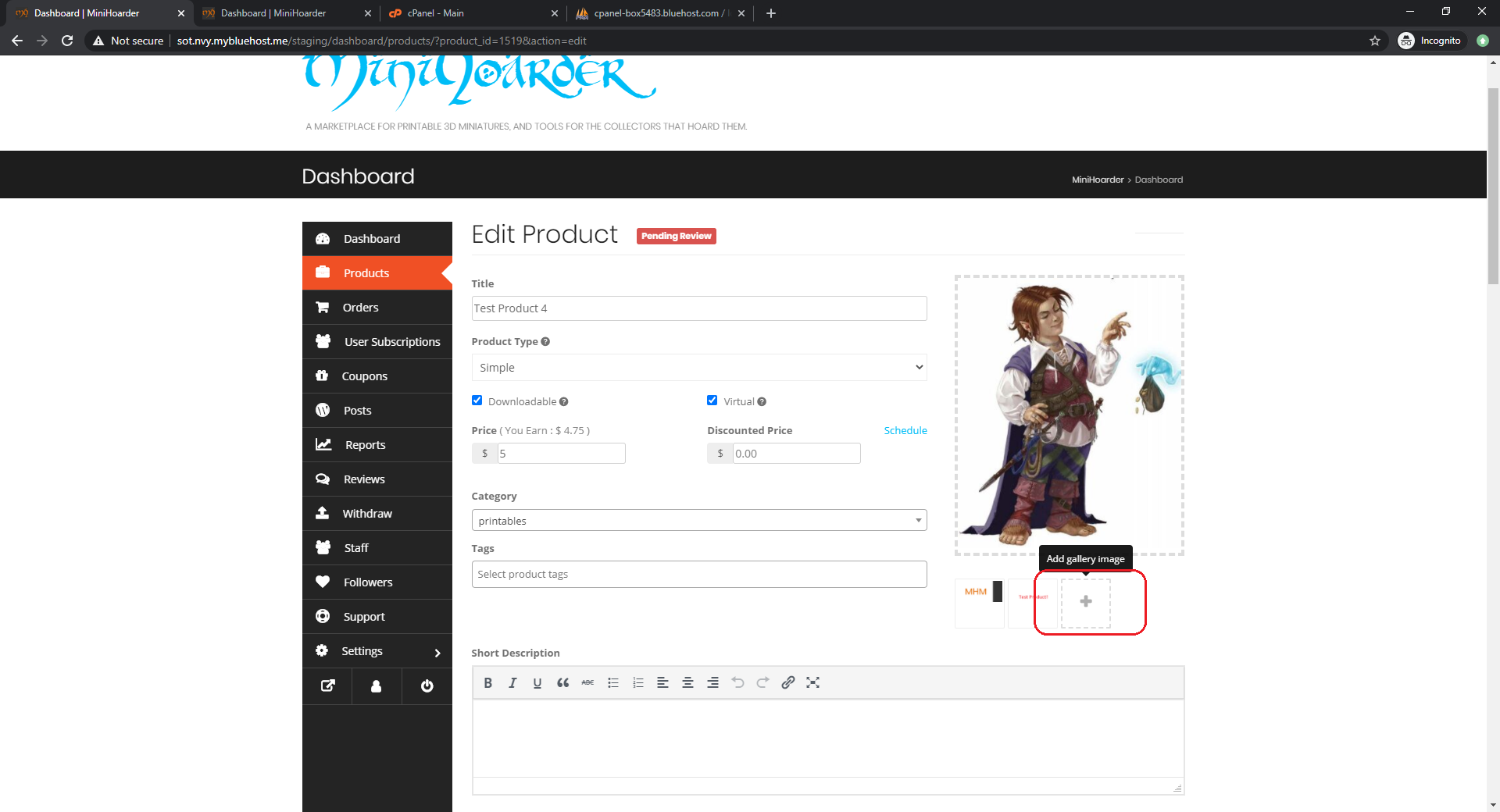
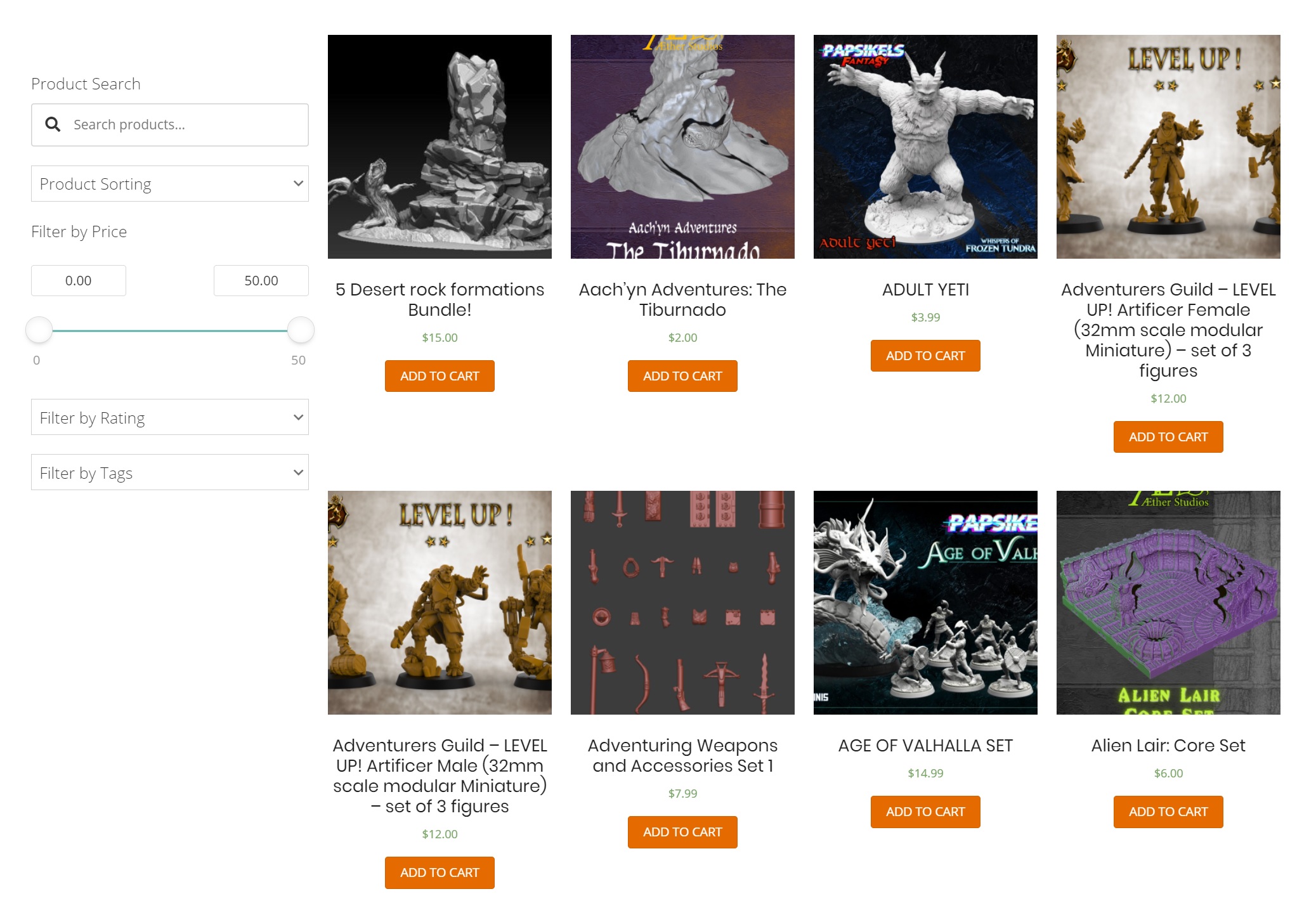
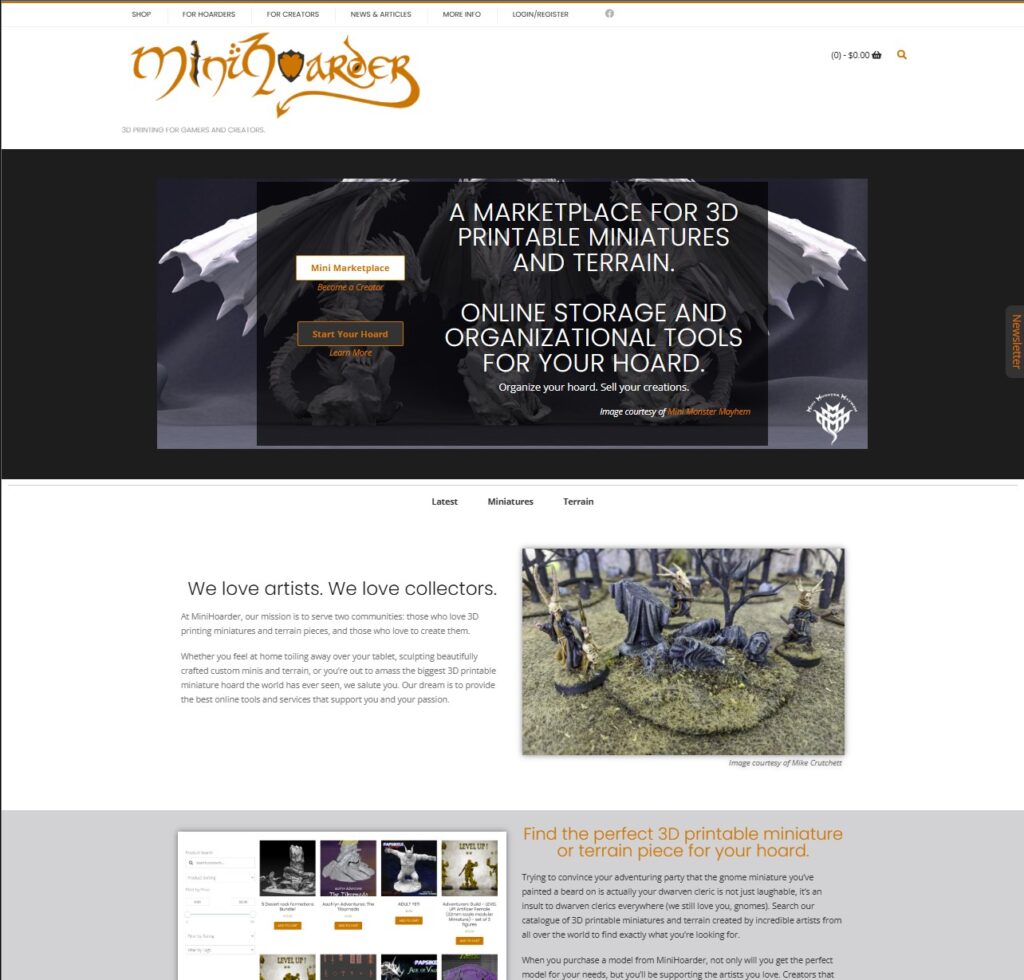
With that in mind, I decided to build a multi-vendor website that allowed artists to sell their products and keep a large majority of the sale (95%), while also offering collectors a way to manage, organize, and store their vast collections. Thus, MiniHoarder was born.
I spent around two and a half years building MiniHoarder and cultivating the community around it. Through it, I had the chance to meet many wonderful artists and fellow 3D printing enthusiasts, and learned some incredibly valuable lessons in building a product people use. I chose to use WordPress as the basis for the site because it was a framework I was familiar with, and because I wanted to get as much out-of-the-box functionality as quickly as possible so I could focus on the new parts, and see if I actually had something worth continuing.
Along the way, I ended up taking the reigns of another popular site, Wargaming3D, which had been going strong for several years. Eventually, I felt like my ability to help the sites progress had run its course, and I found some colleagues that were interested in trying to pick up where I left off. Fortunately, both sites remain operational to this day.
Lessons Learned
- When building a product, getting to an MVP and validating your assumptions is crucial in order to avoid wasting time and resources.
- However, once your product is actually in the hands of users, development time is going to reduced by at least half.
- Serving two distinct customer bases in the same product can dilute your ability to serve either very well.
- Just because a service is profitable does not mean it is making enough to justify the effort it takes to run it.
- Taxes are hard, especially for multi-vendor websites and when dealing with international vendors and customers. Good tax professionals are well worth the time and money.
- People trying to support themselves are less likely to promote a new service in favor established ones in fear of missing out on potential customers. This is true even if the new service offers a better deal.
- Getting people interested is not the same as getting them to pay for something.
Tech Stack
- Website
- WordPress framework
- PHP Backend
- Bootstrap JS frontend
- Pre-existing plugins for standard functionality
- Custom plugins for new functionality
- Digital Ocean Spaces for product storage
- WordPress framework
- Storage Service
- Wasabi for cloud based storage service
- Amazon RDS for metadata
Wins
- More than $100K in sales during first year with a 30% increase the following year
- Distributed over $500K in models for Kickstarter campaigns
- Use of WordPress allowed rapid addition and iteration of new features
- Built a fantastic community of artists and gamers
Losses
- Storage service saw limited success, which was the primary monetization model
- Using pre-existing WordPress plugins worked... mostly, and getting precise functionality desired was sometimes difficult
- Artists really needed better marketing services, not just a platform for sales and distribution