
Hi! Thanks for taking a peek at my page. I am currently a Software Engineering Manager at Shield AI. My team and I are developing the foundational middleware that serves as the backbone for autonomous platforms using Hivemind.
A true nerd at heart, I love game development and the digital arts, and am fascinated by the potential that artificial intelligence and machine learning bring to both. I am constantly looking for new ways to incorporate these technologies into my work and personal projects.
My career in software development began with an internship at Blizzard Entertainment, where I was fortunate to work with the talented Cinematics Research and Development team. While there, I spent time developing a custom Maya plugin that optimized loading and managing scene data for an in-house lighting tool, resulting in a reduced load time from 26 minutes to 26 seconds.
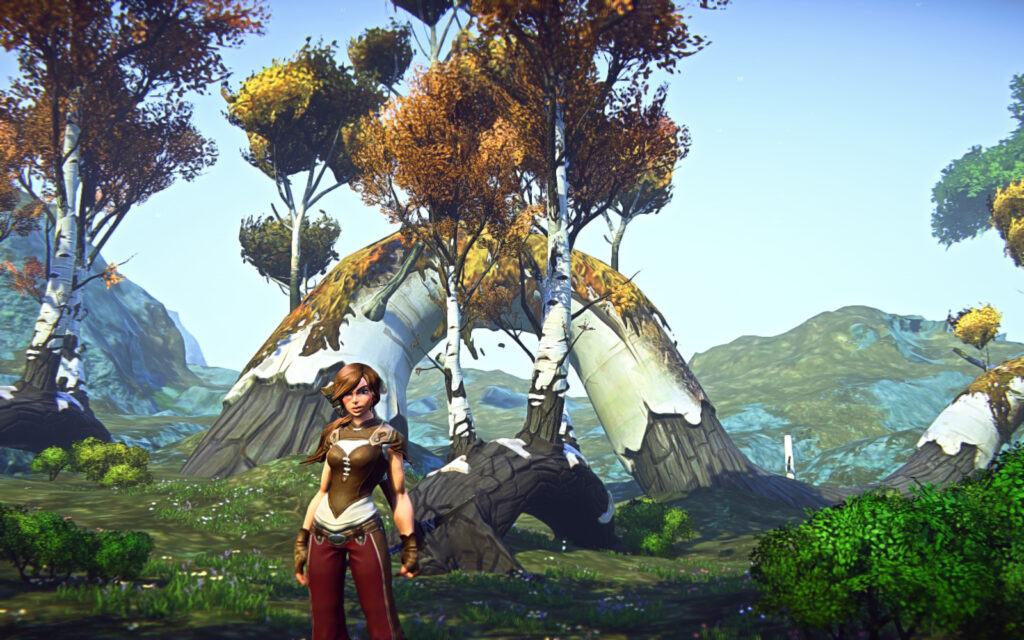
From there, I joined the EverQuest Next team at Sony Online Entertainment (SOE). The dynamic, massively multiplayer world the team was building was exactly the kind of work that started me on the path to becoming a software engineer in the first place, and it was an incredible opportunity to work on something I was so passionate about. While there, I contributed to several key gameplay features, including the Claim system, which enabled players to purchase plots of land that they could build on, and extending the Storybricks AI system to allow for more complicated reasoning and decision-making for NPCs.
After a few years at SOE, which became Daybreak Games Company, I was given the opportunity to become the CTO for a startup called Atlas Vault. Atlas Vault’s goal was to develop an enterprise vendor risk assessment platform that bridged the gap between security and procurement. Though I had done some web development in the past, it was my first experience developing and supporting an enterprise-grade, distributed application. In addition to becoming the primary engineer, I was also responsible for establishing the hiring strategy, development budget, and ensuring the application being developed met all required security compliance measures.
Though the path of Atlas Vault unfortunately ended as many start-ups do, I really enjoyed working in the startup environment and wanted to find another role within a company where I could be flexible and wear a lot of hats. I found that at NetBurner, where I started as a project engineer and worked my way to an Engineering Program Manager. Due to the size of the company, I was able to keep my hands in the engineering work even as I proposed and managed projects for the company. NetBurner specializes in designing small embedded, network-enabled systems, the real-time operating system and drivers that run on them, as well as the tools developers use to build applications for them. I had the chance to work with low-level network programming and debugging, driver development, a host of communication and security protocols, and developing user-facing APIs and tools.

After several years at NetBurner, the desire to work with products leveraging artificial intelligence and machine learning became too great to resist and I moved to Shield AI, where I joined as a product manager for the Hivemind Commander team. There, I worked across engineering, design, and business teams to drive the vision of a ground control station (GCS) that would both replace the existing GCS used for operating single-agent platforms as well as provide the foundation for multi-agent autonomous operations. Replacing the existing GCS required becoming intimately familiar with government and military requirements for existing and future programs that Shield AI wanted to participate in, as well as understanding how those requirements would be satisfied under the umbrella of autonomous systems.
While the work was both challenging and exciting, I realized that I missed working directly on engineering problems. I wanted to get back to my roots and transitioned to the role of Engineering Manager for the EdgeOS Core team, where I am currently working today. We are solving the challenges of building a middleware layer that can be used and relied on to develop autonomous solutions that have to operate in some of the most difficult environments in the world.
I currently live in San Diego, California with my amazing wife and five incredible kids. As someone who loves the snow and mountains, I never thought I would end up in southern California for anything more than a vacation, but after about a decade, it has grown on me. Living so long in one area is another of life’s surprises after moving around so much during my childhood. However, even though there are times when I would love to pack up and move somewhere with mountains, snow, or even just seasons in general, it is easy to see that the stability has been great for my family.
As I mentioned above, I’m a true nerd through and through. I fell in love with Dungeons and Dragons from an early age, and that eventually transitioned into a love for MMOs and open-world RPG video games. This has been a constant throughout my life and is something I have shared and passed on to my kids (as any decent parent would). This fascination, sometimes bordering on obsession, is also what originally drove me to learn programming and study computer science in the first place.
Relatedly, I also adore digital art, especially art that depicts the fantastical worlds and realms usually associated with roleplaying games and MMOs. The time I spent in the game industry has only reinforced this, and I find the ability that some artists have to translate what they imagine into a digital medium just astounding. I minored in fine art during my time at Clemson and still really enjoy dabbling with the tools of the trade. Trying to master these is an art form unto itself. As a result, I have built up a basic proficiency with Photoshop, ZBrush, Blender, and Substance Designer (now Adobe Substance 3D), though I admittedly do not get to spend as much energy here as I would like.
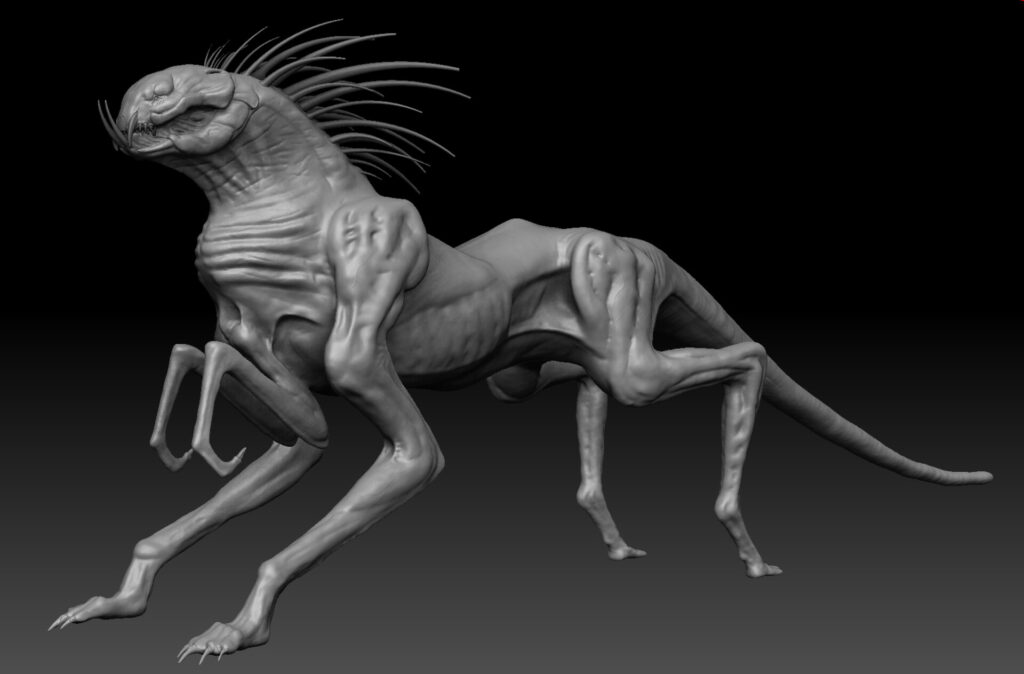
When time permits and inspiration strikes, I find a lot of joy in dreaming up and building new products and services. In the past, these usually take the form of a site that relates to or supports digital arts and artists. My most recent adventure in this regard was building MiniHoarder. MiniHoarder is a third-party vendor site that allows artists to sell 3D printable models, with a focus on those used for tabletop and roleplaying games. It also offers cloud-based storage and organization tools for those who collect these models. I am no longer behind the wheel, but the site is still up and running today!
Currently, I’m exploring the world of artificial intelligence, machine learning, and procedural content generation as it relates to world-building and game development. What these bring to the table, especially with the recent advancements in Generative AI, is exactly why I started down the path of Computer Science in the first place. I cannot think of a more exciting time to jump in and be a part of the journey we are all sharing together.